NASA released the first photos of Earth taken by the crew of Artemis II on Friday, hours after the mission left Earth's orbit.
The first photo, taken by Artemis II commander Reid Wiseman, shows the entire planet, and both the Northern and Southern lights are visible over the poles. Zodiacal light, created by sunlight reflecting off dust in the solar system, is visible in the bottom right of the image.
"Hello, World," NASA wrote in the photo caption.
The photo was taken from the window of the Orion capsule, NASA said, after the crew completed their translunar injection burn.
The space agency is also providing a livestream of views from Orion as it travels to and around the moon.

"We see our home planet as a whole, lit up in spectacular blues and browns," NASA wrote on X. "A green aurora even lights up the atmosphere. That's us, together, watching as our astronauts make their journey to the Moon."
Canadian astronaut Jeremy Hansen told NASA's mission control spacecraft communicator that the Artemis II crew was "glued to the window" and "taking pictures" of the planet after breaking out of Earth orbit. In a live conversation with reporters late Thursday night, Wiseman described a moment similar to the one shown in the photograph.
"There was a moment, about an hour ago, where mission control Houston reoriented our spacecraft as the sun was setting behind the Earth…but you could see the entire globe from pole to pole, you could see Africa, Europe, and if you looked really close, you could see the Northern Lights, it was the most spectacular moment, and it paused all four of us in our tracks," Wiseman said at the time.
NASA shared another image that showed a sliver of Earth through the Orion capsule window on X.
The Artemis II is traveling on a trajectory that will carry the astronauts around the far side of the moon on Monday, then bring them back towards Earth. The astronauts aboard the spacecraft are expected to travel farther from Earth than anyone before them, reaching a distance of about 252,021 miles as they pass behind the moon.
In addition to capturing unprecedented images of the far side of the moon, the mission is set to test flight controllers and procedures needed to safely send astronauts back to the moon for long-duration stays as NASA plans for a future moon base.
"This is a test flight," NASA Administrator Jared Isaacman told CBS News. "This is the opening act in a series of missions that will send astronauts to and from the moon with great frequency as we return to stay."
Supreme Court expresses skepticism over Trump order to end birthright citizenship
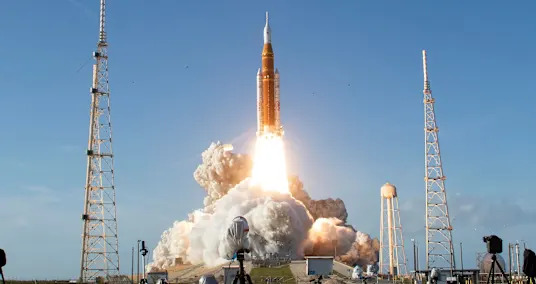
Watch: Artemis II launches on historic moon mission | Special Report
Iran downs U.S. F-15 fighter jet, sources say | Special Report
latest_posts
- 1
 74 suicide warnings and 243 mentions of hanging: What ChatGPT said to a suicidal teen
 - 2Chief of Staff Zamir warns IDF will collapse due to lack of manpower, raises 'ten red flags'
- 3The most effective method to Involve Handshakes for Compromise and Compromise
- 4Astronomers discover never-before-seen celestial object: "Cloud 9"
- 5ABC News' Sam Champion opens up about recent health scare





- Turkey’s intel chief lays out country’s vision for Middle East, world
- Ukrainian troops showed 'greater tactical imagination' than Western trainers, British officer says, pointing to their ambush tactics
- Step by step instructions to Remain Spurred While Chasing after a Web-based Degree
- The most effective method to Pick the Right Old Consideration Administration: Key Contemplations
- April's full moon decides the date of Easter — here's how it works
- Kuwait is softening stance on Israel, dissident tells ‘Post’ after viral UN speech
- Figure out how to Consolidate a Brain science Certificate with Social Work
- Exploiting Unsold Rams: May Be Less expensive Than You Suspect
- Instructions to Safeguard Your Speculations In the midst of Changing Disc Rates